
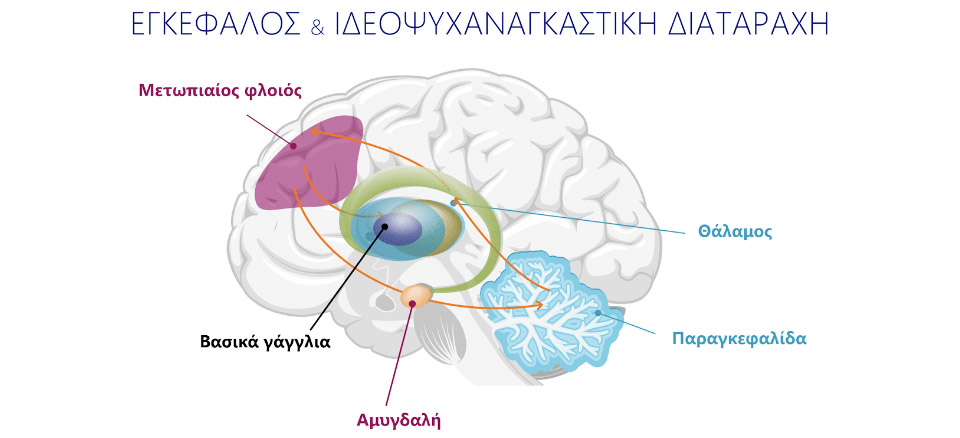
Obsessive-compulsive disorder (OCD) is a mental disorder that affects approximately 1-3% of the population. People with OCD experience recurring, unwanted thoughts or images (obsessions) that cause intense anxiety and distress.
To relieve this anxiety, sufferers often resort to repetitive behaviors or mental acts (compulsions), such as constantly washing their hands or arranging objects. These symptoms not only affect daily life, but can also significantly limit the person’s functioning at the social, professional, and family levels.
To better understand what distinguishes Obsessive-Compulsive Disorder from simple habits, let’s look at the difference between OCD and a simple desire for order or cleanliness, as they are often misunderstood and confused. While order is a matter of preference, OCD is a disorder that significantly impacts daily life and requires professional treatment.
Simple Desire for Order or Cleanliness: The desire to be organized or to keep one’s home clean is a normal behavior that many people exhibit. They may prefer tidy offices, clean homes, or feel calmer in an environment that is under control. These habits can be powerful, but they do not cause significant anxiety or discomfort unless they are strictly followed. For example, if someone cannot keep their room tidy, they may feel annoyed, without it seriously affecting their daily life.
Obsessive-Compulsive Disorder (OCD): OCD, on the other hand, goes beyond simple order or cleanliness. Obsessions cause intense anxiety and force people to perform specific behaviors or rituals (compulsions) to relieve the anxiety. These behaviors are not simply preferences, but necessities for sufferers, and if they cannot perform them, they may experience intense distress or panic.
Seeking Treatment
Despite the existence of effective treatments such as psychotherapy and medication, approximately 40-60% of patients do not find complete relief or experience a relapse of symptoms. Conventional treatments for OCD mainly include psychotherapy and medication. While these methods may be effective for a percentage of patients, the need for alternative treatments is critical, especially for those who do not respond to traditional approaches.
Repetitive transcranial magnetic stimulation (rTMS) is a modern and non-invasive method that uses magnetic fields to stimulate specific areas of the brain. Although rTMS has been used for over 30 years to treat disorders such as depression, it is beginning to show encouraging results for OCD as well. rTMS has even been approved by the FDA as an adjunctive treatment for Obsessive-Compulsive Disorder.
rTMS therapy targets specific areas of the brain associated with OCD. Various rTMS protocols have been developed to treat the disorder, and results show that this method can provide significant relief.
Benefits of rTMS
rTMS offers several advantages, which make it a promising treatment option for OCD:
- Safety and Low Side Effects: rTMS is safe with minimal side effects compared to medication (Fitzsimmons et al., 2022; Rostami et al., 2020; Steuber and McGuire, 2023).
- Non-invasive Method: It does not require anesthesia or surgery, which makes it painless and more accessible.
- Combination Therapy: It can be used either as a primary treatment or in combination with other therapeutic approaches.
Based on the latest research, rTMS therapy may offer significant benefits for OCD patients. Furthermore, the treatment appears to offer long-term benefits, with symptom improvement even 12 weeks after completion of treatment (Fitzsimmons et al., 2022; Marder et al., 2022; Steuber and McGuire, 2023).
Fitzsimmons, S.M.D.D., van der Werf, Y.D., van Campen, A.D., Arns, M., Sack, A.T., Hoogendoorn, A.W., van Balkom, A.J.L.M., Batelaan, N.M., Eijndhoven, P. van, Hendriks, G.-J., Oostrom, I. van, Oppena, P. van, Schruers, K.R.J., Tendolkar, I., Vriend, C. and van den Heuvel, O.A. (2022). Repetitive transcranial magnetic stimulation for obsessive-compulsive disorder: A systematic review and pairwise/network meta-analysis.Journal of Affective Disorders, [online] 302, pp.302–312. doi:https://doi.org/10.1016/j.jad.2022.01.048.
Marder, K.G., Barbour, T., Ferber, S., Idowu, O. and Itzkoff, A. (2022). Psychiatric Applications of Repetitive Transcranial Magnetic Stimulation.FOCUS, 20(1), pp.8–18. doi:https://doi.org/10.1176/appi.focus.20210021.
Rostami, R., Kazemi, R., Jabbari, A., Madani, A.S., Rostami, H., Taherpour, M.A., Molavi, P., Jaafari, N., Kuo, M.-F., Vicario, C.M., Nitsche, M.A. and Salehinejad, M.A. (2020). Efficacy and clinical predictors of response to rTMS treatment in pharmacoresistant obsessive-compulsive disorder (OCD): a retrospective study.BMC Psychiatry, 20(1). doi:https://doi.org/10.1186/s12888-020-02769-9.
Steuber, E.R. and McGuire, J.F. (2023). A Meta-analysis of Transcranial Magnetic Stimulation in Obsessive-Compulsive Disorder.Biological psychiatry. Cognitive neuroscience and neuroimaging, 8(11), pp.1145–1155. doi:https://doi.org/10.1016/j.bpsc.2023.06.003.
Bibliography
Bai, Y.-W., Yang, Q.-H., Chen, P.-J. and Wang, X.-Q. (2023). Repetitive transcranial magnetic stimulation regulates neuroinflammation in neuropathic pain.Frontiers in immunology, 14. doi:https://doi.org/10.3389/fimmu.2023.1172293.
Bruno Daniel Carneiro and Tavares, I. (2024). Transcranial Magnetic Stimulation to Treat Neuropathic Pain: A Bibliometric Analysis.Healthcare, [online] 12(5), pp.555–555. doi:https://doi.org/10.3390/healthcare12050555.
Finnerup, N.B., Kuner, R. and Jensen, T.S. (2021). Neuropathic Pain: From Mechanisms to Treatment.Physiological Reviews, [online] 101(1), pp.259–301. doi:https://doi.org/10.1152/physrev.00045.2019.
Lefaucheur, J.-P., Aleman, A., Baeken, C., Benninger, D.H., Brunelin, J., Di Lazzaro, V., Filipović, S.R., Grefkes, C., Hasan, A., Hummel, F.C., Jääskeläinen, S.K., Langguth, B., Leocani, L., Londero, A., Nardone, R., Nguyen, J.-P. Nyffeler, T., Oliveira-Maia, A.J., Oliviero, A. and Padberg, F. (2020). Evidence-based guidelines on the therapeutic use of repetitive transcranial magnetic stimulation (rTMS): An update (2014–2018).Clinical Neurophysiology, 131(2), pp.474–528. doi:https://doi.org/10.1016/j.clinph.2019.11.002.
Tsai, Y.-Y., Wu, W.-T., Han, D.-S., Kamal Mezian, Ricci, V., Levent Özçakar, Hsu, P.-C. and Ke, C. (2023). Application of Repetitive Transcranial Magnetic Stimulation in Neuropathic Pain: A Narrative Review. 13(2), pp.258–258. doi:https://doi.org/10.3390/life13020258.
.
